The Critical Role of Unified Payment Reconciliation for Multi-Channel Businesses
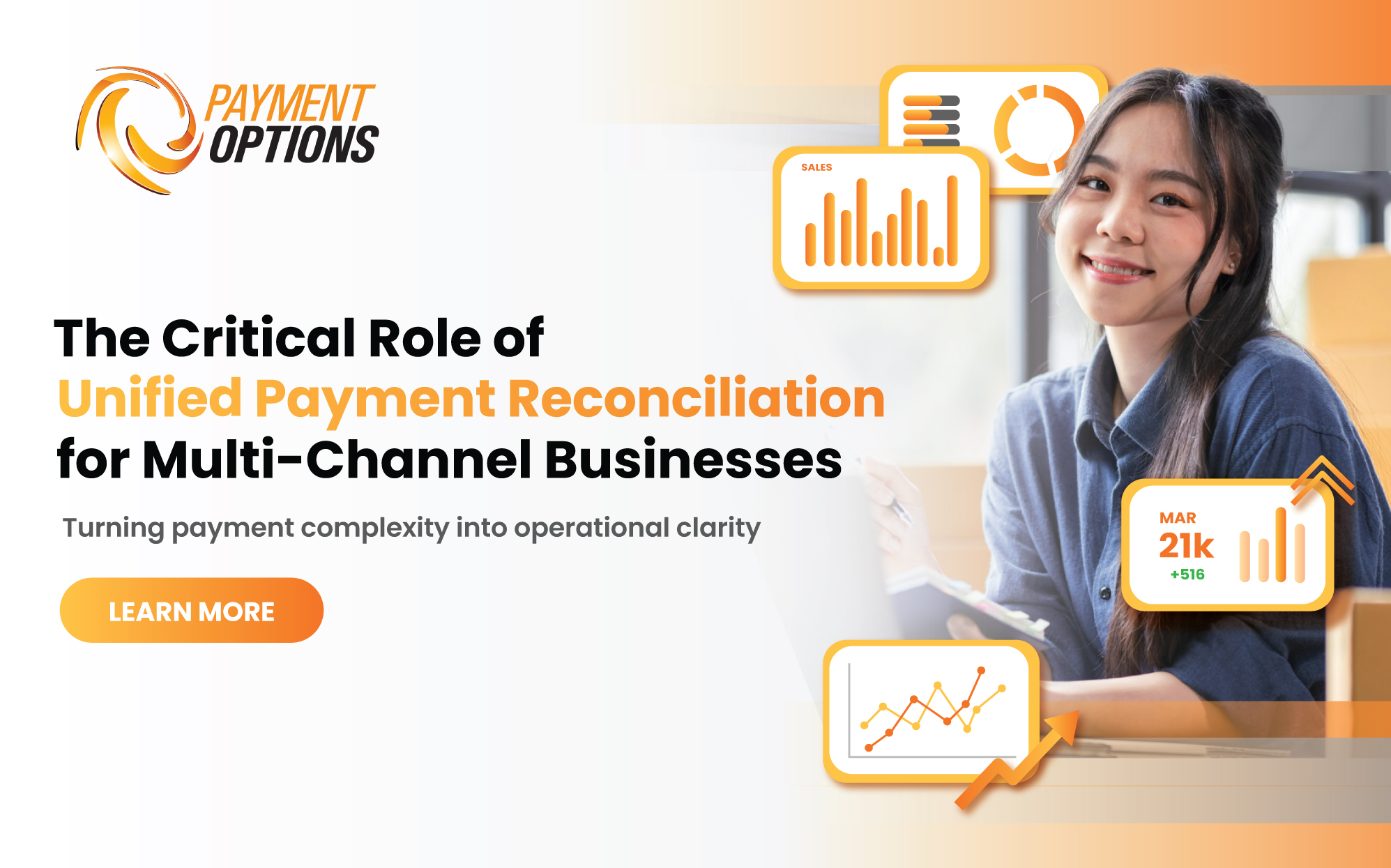
The Critical Role of Unified Payment Reconciliation for Multi-Channel Businesses
Payment acceptance has evolved drastically across the years, enabling businesses to scale rapidly and expand across multiple sales channels. Though this enhances the customer shopping experience and increases potential revenue for businesses, it puts forth a rising concern among all businesses: Payment fragmentation. For many businesses, payment reconciliation remains a tedious, time-consuming and manual process. When transaction data is spread across different platforms and systems, business owners are left to decipher the data, which can quickly become overwhelming. This is where unified payment reconciliation comes in as a crucial operational function.
1. What is Unified Payment Reconciliation?
Unified payment reconciliation refers to the unification of all payment data across different channels into one single consolidated system. Instead of managing separate reconciliation reports, businesses gain one comprehensive view of their payment data to make informed, data-driven decisions.
Unified payment reconciliation platforms usually include:
- Per transaction details
- Real-time transaction monitoring
- Refunds, chargebacks or voids
- Settlement status and or timelines
- Dashboard to view transaction history or generate statements
Businesses that utilize unified payment reconciliation will be able to access detailed information in one consolidated place, streamlining the reconciliation process, and reducing the operational efforts.
2. Impact of Fragmented Payment Data
The real cost of fragmented payment data goes deeper than inconvenience for the personnel performing reconciliation. It can have real adverse effects on the day-to-day operations throughout a business.
Common effects of fragmented payment data:
- Increased risk of discrepancy due to human error during reconciliation
- Longer month-end closing cycles leading to longer business cycles
- Limited visibility into real-time cash flow
- Manual consolidation of multiple platforms and channels to create reports
For multi-channel businesses, these inefficiencies accumulate quickly. When transaction volumes grow throughout businesses’ life cycles, teams often find themselves spending more time reconciling payment data, rather than analysing performance and supporting business growth.
3. How does Unified Reconciliation improve day-to-day operations?
Unified payment reconciliation can address the adverse effects by streamlining operations and improving cash-flow visibility for the business.
More accurate reporting
With all the payment data available in one consolidated place, reports can be generated more consistently and accurately, reducing human discrepancy during reconciliation.
Improve cash flow visibility
Businesses gain clearer insights into their cashflow, allowing them to view profits, pending payments, and payout timelines. This will enable more accurate cash projections and more data-driven decision-making.
Reduced operational workload
Personnel in charge of compiling reports and reconciliation spend less time compiling data from multiple platforms, freeing them up to focus on analysis and developing strategies.
Improved structure throughout the business
A single dataset of payment data gives the business and its core teams a clear understanding of business performance, which can aid in faster and more data-driven operational decisions.
4. How can your business leverage Unified Payment Reconciliation?
Payment Options’ Analytics & Reporting dashboard consolidates all the payment data from every sale channel. All the payment data will be unified into 1 single merchant dashboard with features designed to improve operational efficiency and enhance clarity in the business.
On the dashboard you can:
- Monitor real-time transactions, including successful payments, declines, refunds, and chargebacks, helping businesses diagnose issues quickly.
- Generate detailed financial reports effortlessly, providing businesses and their finance teams fast access to reconciliation-ready payment data.
- Customize dashboard views by selecting key metrics to track business performance.
- Respond to disputes and refunds more quickly with a clear set of management tools.
These integrated features on our platform allow businesses to reduce their need for manual reconciliation, improve cash flow visibility, and help businesses act quickly, turning payment data into an advantage, and helping businesses to make data-driven data decisions. (
5. Why is Unified Reconciliation so important for Multi-Channel Businesses?
In highly mature markets, consumers expect a wide range of payment and shopping options across different card types, e-wallets or multiple outlets. As such, the complexity of all these sales channels has made reconciliation challenging for businesses.
For businesses that have multiple locations, service businesses, and several sales channels, manual reconciliation is becoming increasingly inefficient. However, with unified reconciliation tools, such as Payment Options’ very own dashboard, it helps ensure businesses have control and visibility into their performance, enabling them to scale effectively.
Conclusion
Having unified payment reconciliation is no longer a back-end luxury, it’s an operational necessity for any business looking to scale effectively and sustainably. By consolidating all payment data and providing real-time insights, it can help multi-channel businesses streamline their operations.
Interested in gaining more control and visibility over your business?
*Currently available in Japan and Hong Kong.